

What is the history and true meaning of Thanksgiving Day? Find out with hosts Tim Moore and Nathan Jones on the television program Christ in Prophecy!
Air Date: November 22, 2025
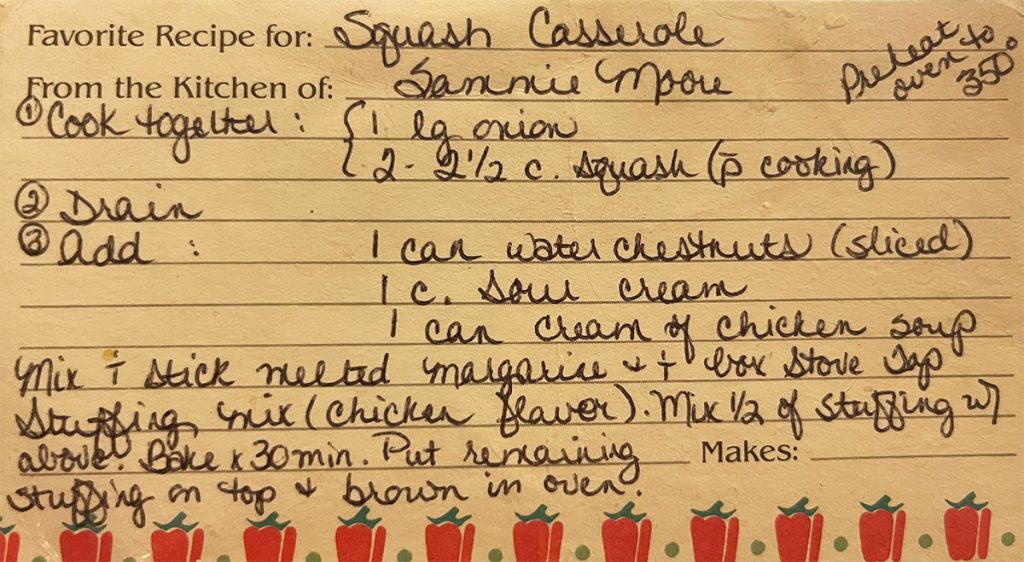
Thanksgiving Recipe
Transcript
Tim Moore: Hello, and welcome to this special episode of Christ in Prophecy!
America is on the cusp of celebrating Thanksgiving, so it seems fitting and appropriate for us to pause and share some perspectives from God’s prophetic Word on the meaning of Thanksgiving, both in contemporary terms and from an eternal perspective.
Nathan Jones: Thanksgiving is a unique American holiday, even though it has been now copied and adopted by some form by other countries, and we do realize that there is some evidence that settlers in Canada expressed thankfulness for their safe passage to the new world, even before the pilgrims commemorated God’s blessing with a special day in what would become the United States.
Tim Moore: The first Thanksgiving in America occurred in 1621, when those early Pilgrim settlers invited the Wampanoag Indians to join them in a festival to thank God for His provision and Providence. Thanksgiving became a national holiday in 1863, when President Abraham Lincoln instituted it as a way to unite a fractured nation in the midst of the Civil War.
Nathan Jones: And sadly, while the holiday had undeniably Christian roots with the object of the thanks stated unequivocably as God Himself, the average American has kept the holiday, along with the Turkey and dressing, but pitched the recognition of God as the source of all blessings.
Tim Moore: You know, that’s right, Nathan. Many people say they want to be thankful, but they are pointedly silent on Who they should be thankful toward. It’s as if thankfulness is a meritorious sentiment all on its own, regardless of whether that thankfulness is directed at anyone whatsoever. Such an attitude would be absolutely foreign to our forebears.
Part 2
Tim Moore: So how about it, Nathan? What is your earliest memory of Thanksgiving as a family gathering, and the foods, and all the festivities enjoyed around that day?
Nathan Jones: Well, you can’t forget the food. My mother is an excellent cook. That was my father’s only advice, find a woman who can cook, when it came to marriage, and my wife can cook very well, too. But my family always lived around the United States, not near us in Tennessee. And so it was a real blessing that–it was a small family, just the five of us, but I remember turkey and Thanksgiving. I do remember when I worked at a grocery store, we used to have the Turkey Bowl, where we’d go out and play football before, and we’d all get back home, and everyone’s all beat up and hurt, but it was a good kind of hurt.
Tim Moore: A good kind of hurt, yeah. We had some of those Turkey Bowls out in the backyard with family. I do remember the food from an early age. That was the thing that is probably most prominent. Turkey, oftentimes, or ham, sometimes other foods, as years went by. Being from the South, we always had sweet potatoes, which was my favorite with, of course, brown sugar and pecans.
Nathan Jones: Oh, yes.
Tim Moore: Pecan pie was a must, homemade rolls, typically, and my mother came to develop something known as squash casserole. And my brother one time took her squash casserole recipe to a local charitable function held by the Chamber of Commerce, and he said, “It’s a squash casserole that even people who hate squash will love,” and indeed they did.
Nathan Jones: Good.
Tim Moore: And that described him. So maybe we’ll put the squash casserole recipe as a link to this particular episode, but nevertheless, food stands prominently, and it did even in that first Thanksgiving, because the Pilgrims were grateful to God Almighty for providing them with food to sustain them after what had been a long season of really dire situation, especially with the food.
Nathan Jones: When you look at the history of that, that the settlers of Plymouth Rock were meant to actually land farther south, and so when they landed up north, pretty much on an inlet, they were very fortunate to land in an area where a former Indian group used to live there, but had vacated it, so they didn’t have to worry about being attacked, but they were so starved, and because it was so late in the year that they were living off oysters that they could dig up out of the sand. And the friendly Indian groups that came to them, like you mentioned, the Wampanoags came, and provided and taught them how to plant. You know, I remember as a kid, bury a fish with the corn, and you’ll have beautiful corn. And so after they survived and unfortunately lost about 50% of them.
Tim Moore: Oh, yeah.
Nathan Jones: The Indians and the Pilgrims celebrated together in that big feast.
Tim Moore: In that big feast, you know, I think this is something that even Scripture would point to, because many times, the Lord had His people, Israel, commemorate a day of celebration with a feast. You think of Passover, they’re commemorating the Lord, passing over the firstborn of the Israelis, because they had painted blood over the doorpost of their house. And how did they commemorate that? With a meal.
Now, there were certain elements of that meal that are traditional even still today, but it was still a time of family, of gathering, and of food. Food has such a connection for human engagement, for human interaction, and for fellowship.
Nathan Jones: Yeah, it’s meant to commemorate something, and that’s why I love that President Lincoln, you know, you think about the country torn apart by the Civil War, that we should have a time where we gather and remember what we should be thankful for. The Bible tells us in 1 Thessalonians, “Give thanks in all circumstances, for this is the will of God in Christ Jesus for you.” Tim, and just looking up, I had to say, how many verses are there in the Bible about thankfulness? I’ve got 100 verses here.
Tim Moore: Oh my.
Nathan Jones: And I’m not going through them all, folks, but we have 100 verses here, and that’s just scratching the surface about what the Bible says about being thankful, because it’s the will of God. And so we’ve got to remember as Christians and non-Christians alike, that is an ordination by God, a command to be thankful, and that’s harder and harder in our society these days, and we seem to have a society that’s more about ingratitude.
Tim Moore: It is really becoming a trend that is very dangerous and unhealthy, because this attitude of gratitude that is supposed to permeate a Christian is not reflected in our larger society. As I mentioned, even in our introduction, I know that some people say, “Well, I’m very thankful.” Who are you thankful to? “Well, I’m not thankful to anyone, I’m just thankful.”
It’s a sentiment without any object to that sentimentality. And yet what do we model to our children and grandchildren before every meal? We usually give thanks. Now, we call it a blessing, but the Lord has already blessed us with the food, so it’s not that we are imparting a blessing on the food, we are blessing the Lord by giving Him thanks in a right heart attitude, even for the food that’s provided meal after meal, after meal.
And yet, as you said, throughout our society today, there seems to be a growing sense of entitlement, which leads to ingratitude. If someone’s entitled to something, they don’t have to say thank you. I find that to be very problematic, even in charitable work. A lot of people do not say thank you when receiving anything.
If I buy something at the store, do I say thank you to the clerk? Do I say thank you to the people who are serving me at a restaurant? Or do I just feel like they owe it to me? I’ve paid for it, I’ve earned it, I’m entitled to it, and so there’s no attitude of gratitude. I try to say thank you as much as possible to really instill this attitude, not just for myself, but for around me.
Nathan Jones: And Jesus set the example. Before He would break bread, He would pray to the Father and thank Him for it. I love Psalm 107:1, “Oh, give thanks to the Lord,” why? “For He is good, for His steadfast love endures forever.” So here, we have not just a precedent, a command by God, but a reason that God who created us, who created everything, and who died on the cross for our sins so that we can have life again, He provided us all this bounty.
The things that we own, we might have worked for them, but the Lord provided all the natural talents and abilities for us to learn. So it should be a natural thing for us to thank the Lord. But I think you make a good point, that in our society, as we become more secular, we become more away from God, we begin to think less about the God who provided for us, which is what Lincoln was trying to point us to, and start thinking of ourselves as little gods of our lives, selfishness.
So now, the thankfulness to the Lord has been replaced by Turkey Day. You know, it’s just all about the food, or it’s the day before Black Friday, where now, it’s the point where as soon as people have done their Thanksgiving dinners, they’re showing up at the stores for sales. It’s a selfishness, a greed that’s overcoming our society, and ruining the point of Thanksgiving to thank God for what He does for us on a daily basis.
Tim Moore: You know, I think now, what would my children remember about Thanksgiving? You’re right, too often it’s called Turkey Day, or it’s the day when sometimes the menfolk sit and watch football game after football game.
Nathan Jones: Football, yeah.
Tim Moore: After football game. And I enjoy football, but there’s a point to where turn the TV off and go play with your kids, your grandkids, and build relationship in that day, not just, you know, a food coma after a big meal. Speaking of Turkey Day itself, Benjamin Franklin advocated that the turkey should be the national bird.
Nathan Jones: That’s right, he did, didn’t he?
Tim Moore: If he had his way, we might be eating eagles and not turkeys today.
Nathan Jones: Yuck.
Tim Moore: I’m glad that he didn’t have his way. Nevertheless, I do think it’s very problematic that culturally, we are transitioning away from even this idea of having a thankful attitude on one day of the year, and instead, it is all about serving ourselves, whether it’s stuffing our face or gaining for ourselves as much stuff as possible. The idea that Black Friday comes right after Thanksgiving—there are a lot of people that can’t wait for Thanksgiving to be over so they can go and consume or at least get all the free stuff and the good deals on Black Friday.
Nathan Jones: That’s like Giving Tuesday is after all these other selfish, like, Internet Day and Black Friday, and all that, so that by the time Giving Tuesday comes, nobody has any money.
Tim Moore: Too often.
Nathan Jones: I think the Bible points in Romans 1:21 to the answer to what you’re saying. It says, “Because although they knew God, they did not glorify Him as God, nor were thankful, but became futile in their thoughts, and their foolish hearts were darkened.” It’s a symptom of a society that elevates ourselves above God, and when we do so, then we become materialistic and selfish, we don’t honor God. And as we’ve seen in our culture, the more materialism, the more secularism, the more even hedonism that’s taken over our country, the more nihilism and depression and suicide that has taken.
They say that there are more girls in the middle school age willing to commit suicide than any generation now. So for all the stuff we have, we’re still not thankful, we’re still not happy, and if we could get back to really truly appreciating what the Lord’s given us, it would radically change our society.
Tim Moore: I think the only value that sometimes I recognize universally in sending young people to other countries, other cultures, you know, many churches take mission trips. I often think if you took the money to send this group of young people overseas and gave it to the missionaries actually working over there, they could live for a whole year instead of taking young people for a few days. But there is value in seeing that we are so incredibly blessed, and getting perspective on the things that we perceive as our needs that are sometimes just wants and wishes.
And you know, Nathan, I think cultivating this idea of being thankful in everything is what Scripture talks about. In 1 Thessalonians 5, now, you and I talk about Paul’s letter to the Thessalonians many times. It’s in chapter four that we talk about the passage referring to the Rapture, but in the very next chapter in verses 16 through 18, Paul says, “Rejoice always, pray without ceasing, in everything, give thanks, for this is God’s will for you in Christ Jesus.” The same sentiment is reflected in Ephesians 5:20, and the idea of giving thanks in everything, you think, “Well, there there’s some things that I might not even feel thankful about at the moment,” but in hindsight, I realize that God has worked everything together for good.
Ambassador Huckabee
You know, we have a tremendous example of this. At our conference in 2024, we had Mike Huckabee, former governor of Arkansas, now serving as United States Ambassador in Israel, and he told a very powerful story of an experience he had that he was not thankful for at the moment until he got a perspective that the Lord had indeed blessed him. Hear what Ambassador Huckabee has to say:
“In March of the year 2002, I was just about to enter my second full year, or second full term as governor, and I was conducting a trade mission to India, and we had some businesses in Arkansas that we were trying to get connected with, businesses in India, and I had a meeting with what was the equivalent of the speaker of the house in the Indian Parliament. His name was G.M.C. Balayogi. He was the speaker who would be the equivalent of a Mike Johnson today in our Congress, and we were to meet in this little village called Bhimavaram in India.
And we were going to meet there, see some work that was being done by some of the people in that village, then we were to have dinner, and get on helicopters, and fly to another community where we were going to hopefully consummate a business arrangement that would be very good for the people of Arkansas, and hopefully good for the people of India as well.
Before we could even start the dinner, Speaker Balayogi got word that an urgent issue had come up in the capital, and that he would be required to leave immediately. I’ve got to tell you, I was just so frustrated, on brink of anger, because, I mean, here, we’d come halfway around the world, this was the centerpiece of the entire trip, to have this meeting, to have the dinner, get on the helicopters, fly to the next village. That’s where we were going to finalize everything. And by him having to abruptly leave, take one of the helicopters, go back to the capital, leaving me and my team to just finish out a dinner without him, and then figure out, “Okay, what do we do now?”
Basically, the trip is ruined. And I’ll be honest, it’s frustrating at a time like that. All that preparation, it’s gone. And in my frustration, disgust, and disappointment, I’m sure I expressed to God how utterly discombobulated I was that this would’ve happened, and why? Why, Lord, would this take place like this?
Well, we finished our dinner, we got on the helicopter we were on, we flew to the next village, and upon landing, we were told some news that turned out to be rather distressing, because when the speaker, Balayogi, got on his helicopter with his team, it was the helicopter that he and I were to be on together to go to the next village after the dinner. Instead of my being on that helicopter with him, I took the second one. We found out that the one that he took, that I was supposed to be in, had a mechanical problem and crashed, and everyone on that helicopter, including the speaker, were all killed.
I would have been on that helicopter. And suddenly, the broken-down trade deal became a whole lot less important, because I got to go home, and I wouldn’t have. In all of our lives, there are those moments when things go the opposite way, and I‘ve got to tell you, that’s not just true for us in modern times, it’s a history of what God has done in the lives of His chosen.”
Part 3
Tim Moore: Wow, you know, that story really hits home to me, because I think of all the times the Lord has protected me or preserved me in spite of myself, or given me a blessing that at the moment didn’t seem like it was a blessing, and yet now, I’m exceedingly thankful that He was watching over me.
Nathan Jones: The fact that Ambassador Huckabee got a change of perspective from what he went through resonates with what you said earlier. I think of when the ministry sent me down to Nicaragua to have a conference with our Spanish translator, Donald Dolmus, and Nicaragua being a socialist dictatorship, I was rather taken aback by how poor even the wealthier areas of the country was, compared to the United States, of course.
Well, then we sent Donald Dolmus to Cuba to speak at a college, and Donald asked for breakfast one day, and they weren’t sure they could provide it. The next day, he gets one egg and a little bit of meat, and he says, “Where’s the rest of the food?” And they said, “Do you know how many of us we had to get to give up stuff to put this breakfast for you?” And he said he couldn’t stop crying. He realized, even as Americans, we look at Nicaragua, and say, “Well, you know, financially, they’re well behind us,” but a Nicaraguan goes to Cuba and sees how really behind they are.
I think, as Americans, we’re so blessed by God that we’ve taken it for granted, and it’s a warning. Because every time Israel did that in the Old Testament, in a generation or two, they’d enjoy the blessings, they’d turn against God, and God would punish them to bring them back to have the right perspective. Tim, I pray that I think we need it, but I hope we don’t get it, that America needs the right perspective.
Tim Moore: We need the right perspective. You know, Nathan, the question, and perhaps the challenge for all of us, whether you have children, grandchildren, are just our own human hearts that tend to wander and stray from the Lord Himself. How do we cultivate this attitude of gratitude that we’re talking about? And we can express our own appreciation, but sometimes if we’re not careful, it becomes very generic. “Oh, just thank you God for my blessings.”
Nathan Jones: Yeah, it does.
Tim Moore: You know, there’s a song we used to sing, “Count your blessings, count them one by one, and see what God has done.” Now, I’m paraphrasing, but the idea of counting one by one. Nathan, we could go on all day, but what are some of the things that we should regularly recite to each other, to our children, grandchildren, and to our own selves to remind us of what God has done? Give me some examples.
Nathan Jones: Sure, I think we obviously have to go to Scripture for that, because that’s where we learn where we get our things. James 1:17. “Every good gift and every perfect gift,” is where? “From above, coming down from the Father of Lights.” So here, we know where it’s from. 2 Corinthians 9:15, “Thanks be to God,” for what? “His inexpressible gift.” Psalm 106:1, “Praise the Lord. Oh, give thanks to Him,” why? “Because He is good.” We, as we continue, as a society, to pull away from God have forgotten that the blessings we enjoy are from God. And when we teach our children through Scripture where that comes from, they develop an appreciation for what they have.
Tim Moore: Amen. You know, the Scripture says, “God works all things together for good, for those who love Him, and for His glory.” And I’ve told the account many times of Joseph, who was sold off into slavery, who was languishing in prison, in servitude for a season, and yet he never got down. He was never out, because he was always prepared when the Lord restored his fortunes, and he came back into a position of responsibility, and even of power. And so he was ready to serve the Lord, but he never despaired, even in those down moments. I think he had a thankful attitude.
And later, as his brothers showed up, and he could have actually said, “All right, now, you’re going to get yours,” he said, “What you meant for evil, the Lord meant for good.” Joseph, even in that season, had an attitude of appreciation that everything worked for the good of his family, and ultimately, for the glory of God. And if we had that attitude.
Obviously, here, at Lamb & Lion Ministries, Nathan and I are very thankful for the salvation we know through Jesus Christ. We’re thankful for the calling of serving at this ministry and having the privilege of proclaiming the soon return of Jesus Christ and the Gospel of Jesus Christ. We are grateful for the purpose and the meaning our lives have, and all of us here at this ministry, and I’m sure that each and every one of you, in some way, shape, or form, has been given a calling, as well as purpose and meaning, if you have a relationship with Jesus Christ.
Nathan Jones: Right, you know, the Bible even teaches us how to be thankful. Psalm 100:4, “Enter His gates with thanksgiving, and His courts with praise.”
Tim Moore: Praise.
Nathan Jones: “Give thanks to Him, bless His name.” Right, I don’t know how many times before dinner, “Thank you Lord for the food you’ve given us.” Okay, and we moved on.
Tim Moore: “Let’s eat.”
Nathan Jones: But have we tried to try to mix it up a little bit? Like, put a little praise in there, you know? How about blessing His name, you know? Really truly understand that what our blessings are, comes from the God of the universe.
Tim Moore: You know, the old adage of God bless America, we’ve heard several times, where people have flipped it and say, “America, bless God.”
Nathan Jones: Should, yes.
Tim Moore: Even as we bless our food, let’s bless God and give Him praise, honor, and glory…
Nathan Jones: Amen.
Tim Moore: For all the blessings He’s poured in our lives. I think, obviously, Nathan, as we get to co-labor here, as others watching us today, as you are able to serve the Lord in whatever capacity you have, I hope you take time to thank Him, to bless Him, to praise Him, and also, to pass on that heart attitude to those around you. Sometimes praise itself is infectious.
Now, I know that’s a negative word, but what I mean by that is you encourage those around you to have an attitude of gratitude if you express it, if you are bubbling over with that kind of thanksgiving, and so whatever overflows from our heart tends to slosh on the people around us, and boy, I hope it is this thankfulness that Scripture talks about.
Nathan Jones: And it’s good to practice it, because Psalm 30:12 says, “That my glory may sing your praise and not be silent. “Oh Lord my God, I will give thanks to You forever.”
Tim Moore: Amen.
Nathan Jones: So we are going to be standing for the God of the universe one day, and we are just going to thank Him for giving us life, and new life by His salvation, and eternal life in glorified bodies. The Bible says that the presence of God is so amazing that when we see Him we can’t help but fall at His feet and worship Him. I long for that day, because I’m not the best worshipper. I want to be able to do it naturally.
Tim Moore: I’ve tried to imagine, as Scripture refers to it, I even have a note in my Bible, saying, “I can only imagine when it talks about people coming and falling at His feet.” And I’ve tried to imagine, as the song says, how will I respond when I come face to face with Jesus Christ? Will I wrap my arms around Him? Will I fall at His feet? The bottom line, Nathan, as you said, I will praise Him, I will thank Him. I will worship Him forever and ever.
You know, here at Lamb & Lion Ministries, we are called to proclaim the soon return of Jesus Christ, but we are thankful that there are so many who have partnered with us. You’re watching Christ in Prophecy Television, but we also have Christ in Prophecy Radio, as well as a wealth of other publications and periodicals, our bi-monthly magazine, The Lamplighter, and a website that is just chockfull of free materials. I say free, because they have been supported by countless prophecy partners and other supporters over the years. Nathan, what are some of the ways that we reach out to proclaim Jesus’ soon return beyond what I’ve already mentioned?
Nathan Jones: Well, if we’re going to say thankful, what are we thankful for? I am thankful that we live at a time period where the Lord has given us such communication venues, the very fact that we can reach the world through television and radio, through media, through the internet. I have Muslims who write to the ministry asking questions, saying, if anyone knew they were asking us these questions, they’d be killed. And we can live in a time where we can share the Gospel through social media all over the world.
Tim Moore: Amen.
Nathan Jones: And we do that through our website at christinprophecy.org, or through our Lamb & Lion app, our YouTube channel, which is also Christ in Prophecy, our Rumble channel, the Lamplighter magazine. Theres so many different ways media can get out there, and we’re so thankful for you all who participate in our Facebook Groups and Pages, and who share what we put out there about the Gospel with other people. Folks, we couldn’t get this Gospel message out there without you helping us distribute it, so thank you.
Tim Moore: That really is exactly right. We are very thankful for each one of you who shares our passion to serve the Lord and to proclaim His soon return. Many of you do that in your local church, within your family, your community, but also, we are so tremendously thankful that so many of you have partnered with us, co-laboring, as I said, but also becoming Prophecy Partners to support the work of this ministry.
And not only do we use your resources here at Lamb & Lion Ministries, but we also share that blessing, passing on our thanksgiving, and the generosity of our supporters with others, to sister ministries scattered all around the world, including a number in Israel itself.
Well, Nathan, we live in exciting times, but we have so much to be thankful for, even as the world grows darker day by day, because even the darkness demonstrates that Jesus is coming soon, and our joy will soon be made complete.
Nathan Jones: My last comment would be this, Hebrews 12:28. “Therefore, let us be grateful for receiving a kingdom that cannot be shaken, and thus, let us offer to God acceptable worship with reverence and awe.” Folks, we have victory in Jesus Christ. We have a lot to be thankful for.
Closing
Tim Moore: We certainly do. Like most of you, we do look forward to Thanksgiving as a wonderful time of family and fellowship. We enjoy foods that are special within our families, and all the fun of being together. But we are intentional about emphasizing what Thanksgiving was originally meant to be, an outpouring of gratitude to our Heavenly Father for His bountiful blessings poured out into our lives.
Nathan Jones: And that’s not to say that our lives are always easy. Just as Jesus said, “In this life, we will have little-t tribulations.” Trials, and troubles, and temptations beset us just as they did the apostles and Jesus Himself. Consider this, the only apostle to die a natural death was John, and that was only after the Roman emperor tried to have him executed and then banished him to the Isle of Patmos, where he famously wouldn’t die. From a worldly perspective, none of them lived their best life now as winners and champions, but they were consistently thankful to God for calling them to serve in His kingdom.
Tim Moore: You could say that despite their circumstances, they could say, “We have this hope as an anchor for the soul, firm and secure,” referring to Jesus, or “We have this treasure in earthen vessels so that they’re surpassing greatness of the power will be of God and not from ourselves; we are afflicted in every way, but not crushed, perplexed, but not despairing, persecuted, but not forsaken, struck down, but not destroyed, always carrying about the body the dying of Jesus, so that the life of Jesus may also be manifested in our body.” The inherent gratitude in Paul’s words comes through, because he kept his eyes on Jesus and the promise of eternal life in Him.
Nathan Jones: And we pray that you and your family enjoy a wonderful and blessed Thanksgiving. We hope that you’re intentional about reflecting on all you have to be thankful for, regardless of the circumstances in this life. And if you have little ones, we sincerely encourage you to cultivate an attitude of gratitude in them.
Tim Moore: Christian gratitude is not limited to a single day of the year or a cursory prayer before each meal. It is a heart attitude that permeates our lives, and overflows from our heart into our speech and testimony. The greatest of all our blessings is the amazing grace of God, “that saved a wretch like me.” John Newton was right when he wrote the famous hymn that expresses heartfelt gratitude for God’s unmerited favor that extends salvation to all who call upon His name and believing faith. And his song ends with the realization that:
When we’ve been there 10,000 years,
Bright, shining as the sun,
We’ve no less days to sing God’s praise
Than when we’d first begun.”
May your heart overflow with praise and thanksgiving to our great God and Savior, Jesus Christ, now and forevermore.
From the entire Lamb & Lion Family, to you and yours, Happy Thanksgiving, and Godspeed!
End of Program
