
Bethlehem
Little City of Spiritual Battle
By Tim Moore
May you live in interesting times.
I’ve referenced that proverbial statement more than once as a curse veiled within a blessing. The insinuation is that “interesting times” are often perilous, or at least filled with uncertainty. Most people prefer to live quiet, predictable lives. Some even become quite flustered when someone moves their cheese.
But, as Bob Dylan proclaimed in a song filled with Bible prophecy allusions, “the times, they are a-changin’.”
Even the increasing frequency and intensity of the signs of the times was foretold, as were the wars and rumors of wars, societal upheaval, and the dread that fills the hearts of those who do not understand the times. However, for students of God’s Word, none of the changes should come as a surprise. Like the sons of Issachar, we have understanding that transcends human knowledge and peace that passes understanding.
With that in mind, Bethlehem stands as a living memorial to the battle that rages on the earth. The ancient City of David, which was a quiet little town off the beaten path 2,000 years ago, is still a primary battle site. Let’s learn the lesson of Bethlehem and gain wisdom from the truths it reveals.
City of David
Bethlehem is first mentioned in Genesis 35 as the place where Jacob’s beloved wife, Rachel, was buried. Rachel’s name means “ewe”—a female sheep. The name is intended to convey gentleness and the blessing of fertility, which is ironic, given that Rachel’s womb remained closed as her sister Leah began to bear Jacob’s children.
Several generations later, Boaz, the kinsman-redeemer who took Ruth the Moabitess as his wife, lived in Bethlehem. The scenes of Ruth foraging grain from the fields near Bethlehem explain why Bethlehem was named “house of bread.” This side of the Incarnation, we recognize that Boaz foreshadowed our great Kinsman-Redeemer, who has chosen a (largely) Gentile Bride in the form of the Church as He redeems those who were once outcast and hopeless. (Even Naomi foreshadows the restored joy of the forlorn Jews once they see the love expressed by the Redeemer for His Gentile bride.)
By the time that Boaz’s grandson, Jesse, was raising boys in the vicinity of Bethlehem, the city was also known for its shepherds and their flocks. This would continue through the time of Christ. Brock and Bodie Thoene have incorporated the site of Migdal Eder (“tower of the flock”), mentioned in Genesis 35 and Micah 4:8 into The A.D. Chronicles, their fictional series built around the true, historical account of the life and ministry of Christ. Their research indicates that in Jesus’ time, temple lambs would have been bred and born in the vicinity of Bethlehem and often swaddled at birth to prevent injury that would have rendered them unsuitable for sacrifice.
Site of a Census
We all know that while Mary was pregnant with Jesus, Caesar Augustus mandated a census throughout the Roman world. Unlike our decennial census required by the Constitution to determine congressional representation, the Roman census was undertaken to ensure tax compliance. Joseph obligingly trekked to Bethlehem with his betrothed wife, Mary, because he was a descendant of David.
This is another example of God’s prophetic will working through the most unlikely of circumstances. For most Jews, the requirement to travel to their birthplace or ancestral home would have been an inconvenience to add to their resentment of Roman oversight. But in the providence of God, the dictates of an authoritarian pagan ruler ensured the perfect fulfillment of what He had already declared.
Much has been written and preached regarding the lack of room in the inn when Jesus’ earthly parents arrived in Bethlehem. To our sensibilities, it seems cold-hearted to turn away a pregnant woman about to give birth. But whether the innkeeper was reluctant to render his establishment unclean (and therefore unrentable) by the issue of blood involved in childbirth, or whether the influx of people had actually overwhelmed the little town, Mary and Joseph were relegated to a stable.
To cite Bodie Thoene, “Everything means something.”
God did not ordain that His Son would be born in a palace or amidst the high and mighty. He willed that Jesus’ birthplace would be as humble as the Messiah Himself. Surrounded by beasts, welcomed by a virgin mother and carpenter father, and worshiped by lowly shepherds, Jesus’ arrival was ignored by the hoity-toity and the hoi polloi alike. But His arrival was indeed noted by others.
Although our nativity scenes are replete with representative wise men, it is likely that the Wise Men from the East did not arrive for many weeks or months. Coming from the territory of the former Babylonian Empire, they had been anticipating the arrival of a Jewish Messiah-King because they were students of Daniel’s prophecies. These magi from the Orient watched while they waited expectantly, and observed signs in the heavens that alerted them to Jesus’ birth.
Scripture records that they followed the Star (whether supernatural or a convergence of stars and planets) to arrive in Jerusalem. Their inquiries about the Messiah’s birth created quite a stir—revealing that prior to their arrival, no one in the Jewish capital had even been aware of His birth. Herod quickly invited them to his palace to determine the nature of their quest (not because he was devout or eager to worship, but because he was wary of any threat to his own closely-guarded power). When he made inquiries of the chief priests and scribes, they were well-versed in the biblical prophecies focused on the Jewish Messiah: He would be born in Bethlehem, the City of David.
But even as the foreign Magi arrived eager to find and worship the newborn Messiah, Scripture does not record that a single priest or scribe bothered to go with them the handful of miles to see for themselves. In the words of James (1:22-25), they were not “doers ofthe word, [but] merely hearers who delude themselves.”
A Rising Threat
As much upheaval as the news of Jesus’ birth caused in Jerusalem, there was another realm that was thrown into absolute revulsion and chaos: the spiritual realm.
Just like the Jewish chief priests and scribes, Satan knew that the Messiah would be born in Bethlehem; he just did not know when. Immediately after Jesus was born, Satan must have been prevented from threatening the newborn and His parents. But the Magi’s arrival in Jerusalem presented an opportunity to steer Herod’s paranoid and wicked heart to commit a great evil—one that was also prophetically foretold.
Upon learning exactly when the star appeared to guide the Wise Men toward Judea, Herod tried to manipulate them to return and disclose the Child’s exact location. When they left the area by another route (having been warned by God to avoid Herod and his schemes), the self-proclaimed Idumean king of the Jews became enraged. Herod ordered the massacre of all the male children in the vicinity of Bethlehem under two years old, indicating that his inquiry had led him to believe that Jesus was probably one to two years old.
Jeremiah’s tragic prophecy was fulfilled: “A voice was heard in Ramah, weeping and great mourning, Rachel weeping for her children; and she refused to be comforted, because they were no more” (Matthew 2:18, citing Jeremiah 31:15). The resting place of Rachel was soaked in innocent blood, but Joseph had been warned to take Jesus and Mary to Egypt to flee the carnage—setting up the fulfillment of yet another prophecy (Matthew 2:13-15).
Hope Turns to Fear
Following the birth of Jesus and the Holy Family’s escape, Bethlehem is not mentioned again in the pages of Scripture. But it has remained a touchstone to people of many faiths.
It is well known that Emperor Constantine’s mother, Helena, visited the Holy Land in about 325 AD and designated various sites related to key events in the life of Christ. There is some evidence that the Early Church tradition would have already recognized legitimate locations and even worshiped in the vicinity of Jesus’ birthplace (Bethlehem), hometown (Nazareth), ministry headquarters (Capernaum), and the Crucifixion site (Golgotha). But it may have been difficult to determine the exact location of His birth, even 35 or 40 years after the First Advent, when early Christians began to congregate at the locations described in the Gospels.
It is also recorded that prior to the Roman emperor embracing Christianity, other rulers had attempted to eradicate Christian faith in its very birthplace. In 135 AD, Emperor Hadrian had ordered a temple to Adonis to be erected in the place where Jesus was born. He even commanded that a sacred grove be planted to obliterate the memory of the supposed Jewish Messiah. Yet over 100 years later, Origen (a Church Father from Alexandria) would reference Bethlehem as the place where “He was born, and the manger in the cave where He was wrapped in swaddling clothes”—citing a particular cave still identifiable in the city.
Based on his mother’s report, Constantine directed a basilica (church) to be built. It was dedicated on May 31, 339. Subsequently destroyed by fire, Emperor Justinian built a new basilica in the mid-500s. That structure formed the basis of the Church of the Nativity, which is still in Bethlehem today. But it was doomed to a long progression of claims and counterclaims by people of various Christian persuasions and even different faiths.
The first foreign assault in the Christian era occurred in the 600s, when a Persian army invaded Palestine (the insulting name the Romans gave Israel following the First Century Jewish revolts). Still, some traditions were spared. Legend has it that the Persian commander Shahrbaraz decided not to raze the church because three magi wearing Persian clothing were depicted above its entry door.
Following the Crusader period (in the 1100s), the city and the church were the contested property of first one, then another king, emperor, or sultan. While the Islamic Ottoman Empire controlled territory throughout the western Mediterranean, the church was repeatedly desecrated. Even today, visitors note that the primary entry door is surprisingly small—a measure taken to prevent Ottoman soldiers from riding their horses into the church.
Today, the Church of the Nativity is almost as dark and foreboding as the Church of the Holy Sepulchre. Division and rancor mark the relationships between the priests and advocates of the different Christian sects that claim to revere the site. That acrimony became so pitched and violent that in 1757, the Muslim overlord of Palestine enacted what is known as the Status Quo, stipulating that all denominational boundaries at nine Christian sites would be frozen in place. Recognized in subsequent European treaties, the Status Quo boundaries are still observed today.
That brief history lesson is meant to convey the (sometimes misguided) reverence given to the city and site of Jesus’ birth by Christians, and the disregard offered by those who have different allegiances. Even though Muslims are taught that Jesus was a prophet and should be honored as such, they vehemently reject Christian belief in His divine nature and supernatural conception. And the Muslims living in Israel have become passionately revisionist about the circumstances surrounding Jesus’ birth.
Jesus as Palestinian
As Islam came to dominate the Middle East, various Christian enclaves diminished or were overwhelmed and eradicated. That included the scholarly Christian bastions of Alexandria, Damascus, and Aleppo. I know that sizable Christian minorities remain in those locations still today (at least until the Syrian civil war and the rise of ISIS decimated the Syrian Church), but the Christian center moved markedly West. That fact is demonstrated by the renaming of Constantinople (the Eastern capital of the Orthodox Church) as Istanbul, a markedly Muslim city today.
With regard to Bethlehem, a significant Christian population remained as well until very recent times. Most of the Palestinian Arabs living in Bethlehem (86%) claimed a Christian heritage as recently as 1950, but that majority has dwindled today to less than 10% in the face of relentless Muslim hostility. There seems to be a compulsion on the part of Muslims to seize, or at least attempt to assert their superiority over, Christian holy sites. It is the reason the loudest (and longest) Muslim call to prayer in Israel is blared from the loudspeakers of the minaret erected immediately adjacent to the Church of the Holy Sepulcher. Muslims forget that although the adhan (call to prayer) is loud enough to wake the dead, Jesus has already risen! (That desire to mark territory and gain ascendancy also explains the Muslim attempt to erect a mosque at the 9/11 site of the Twin Towers.) That drive to deny and destroy is evident in Bethlehem.
Even now, the remaining Christians in Bethlehem can point to Bethlehem University (Catholic) and Bethlehem Bible College (Evangelical). But like many self-described Christians throughout Europe and the Western hemisphere today, Christian identity is something most Palestinian Arabs see as a heritage, not a thriving faith or personal relationship.
A dear friend was once invited to Bethlehem Bible College to consider possible teaching opportunities. During his meeting with the president and staff, while also on a pilgrimage trip, his hosts took offense when he referred to Israel as Israel. The Arab Christians expressed great displeasure and counseled him never to refer to the land of Palestine by that odious name (Israel). Their reverence for the Word of God and His promises to the people and the Land of Israel was trumped by their Palestinian Arab nationalism. My friend realized that he would not be able to teach the full counsel of God’s Word in such a place.
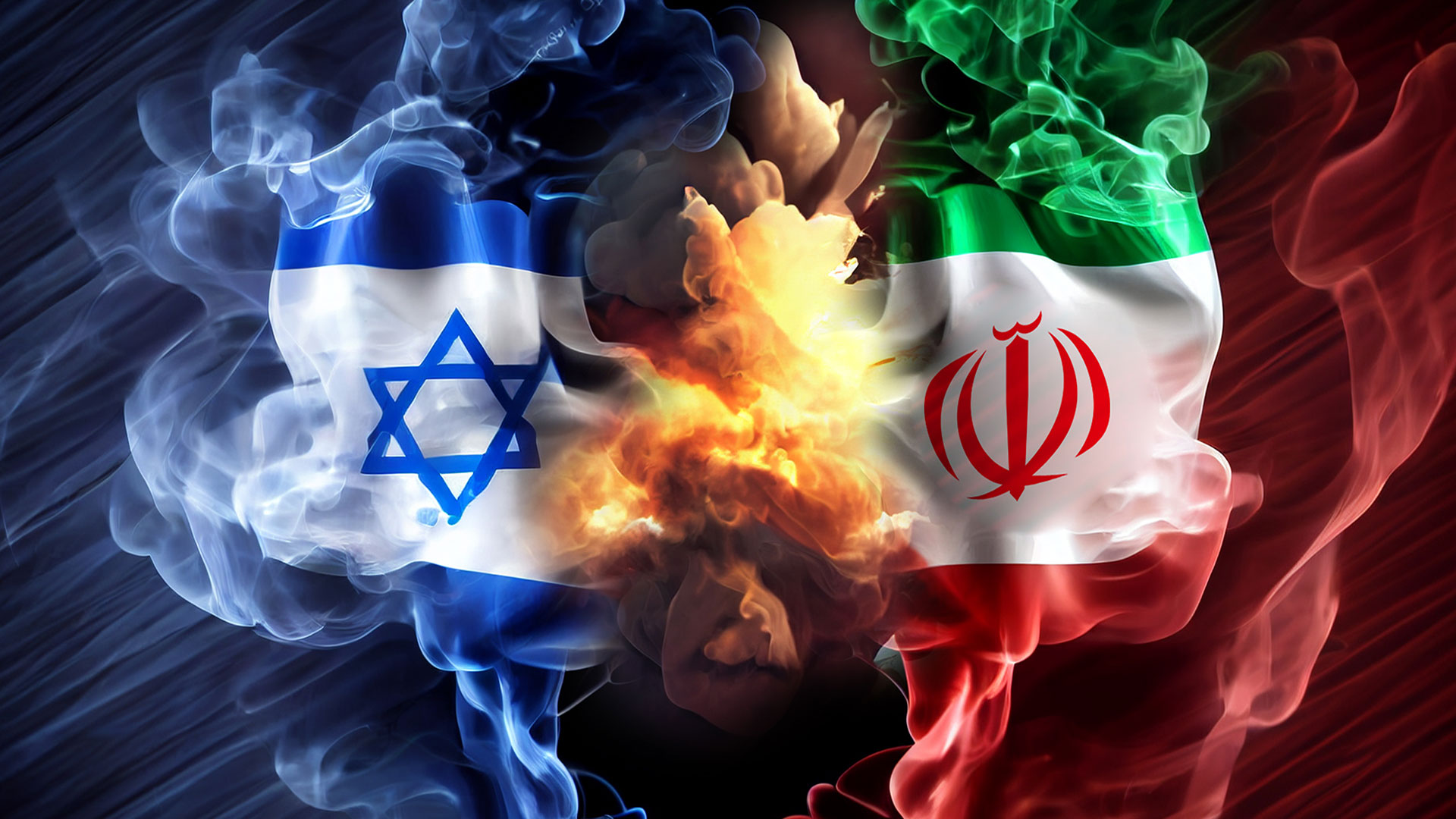
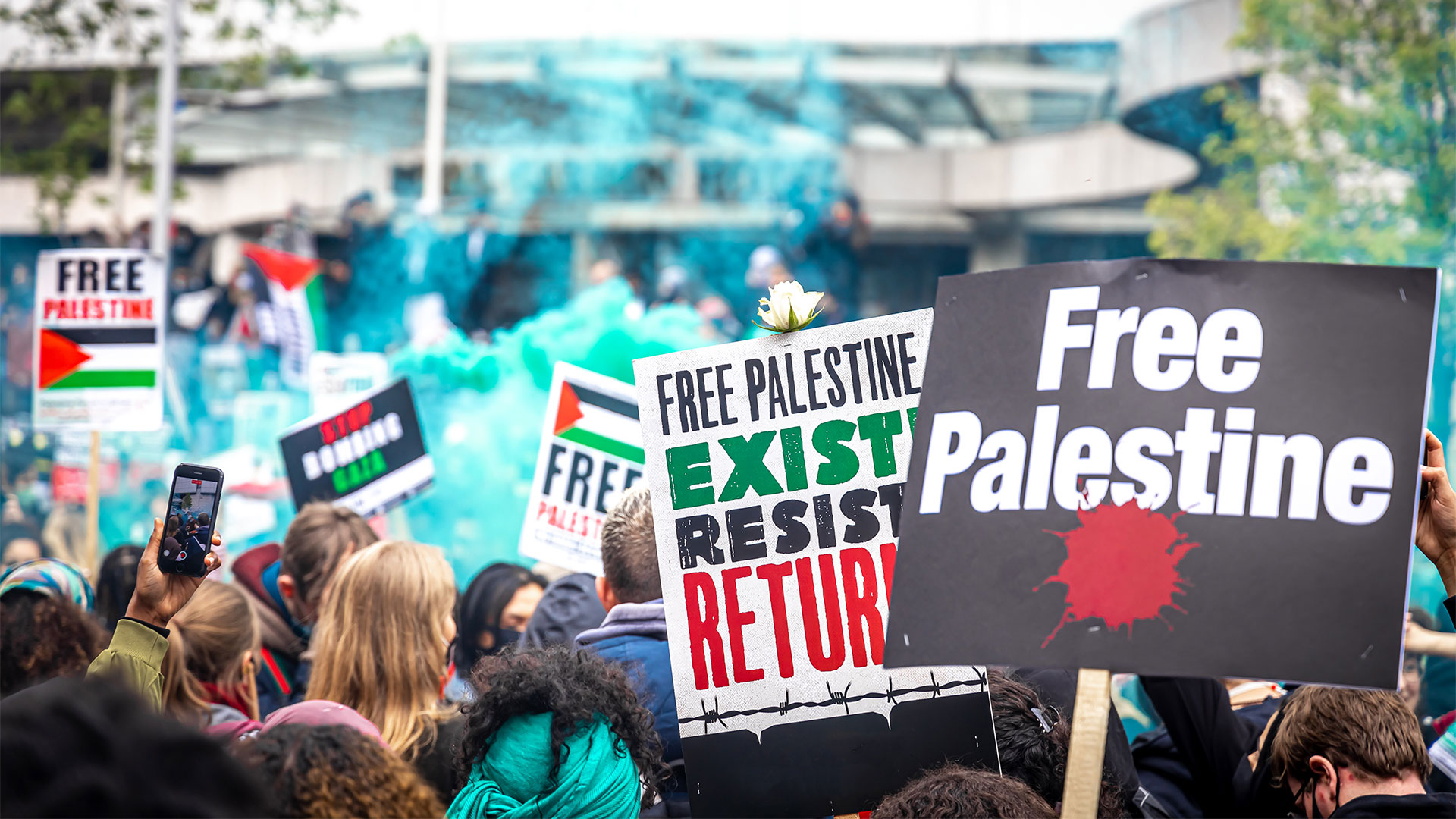
Even now, widespread propaganda is asserting that Jesus was a Palestinian. Tragically, some professing Christ-followers have embraced virulent antisemitism, distorting His Jewish identity and denying God’s covenantal promises to Israel.
One episode conveys this animosity better than any other I know.
In the 1990s, a rash of terrorist attacks wracked Israel as Palestinians sought to inflict great pain and suffering on the Jewish people. After one callous attack on Jewish civilians (always the softest target for terrorists), a band of Arabs fled toward Bethlehem and rushed into the Church of the Nativity. For a number of days, the IDF endeavored to draw the terrorists out of the church without actually storming the building. They followed classic hostage protocol, with loud music, bright lights, and round-the-clock negotiations. Eventually, IDF snipers exchanged gunfire with the terrorists as they fired from inside the church.
Finally, a deal was struck whereby the terrorists would be allowed to travel unimpeded to Gaza. They arrived in the strip of land now controlled by Hamas and were welcomed as heroes. After their departure, the priests and monks administering the Church of the Nativity discovered bombs and booby traps left behind by the terrorists. They were forced to request the assistance of IDF sappers (bomb disposal experts) to defuse and remove the threatening devices.
Before reopening the church as a major tourist attraction, the “Christian” caretakers of the Church of the Nativity held a special service to ceremonially cleanse the building from the presence of the Jews. That reprehensible attitude (and the fact that the mafia-like Palestinian Authority controls Bethlehem) is why Lamb & Lion Ministries no longer goes there during Pilgrimage trips. That, and the fact that my Jewish guide is likely to be targeted and killed if he dares to visit Bethlehem.
There are faithful Christians in Bethlehem. I know some of them personally. But the city is in the clutches of thugs who justify their hatred as part of their religious fervor. That Satanic ideology has even infected many who claim to follow Jesus but reject His Jewishness and deny His faithfulness to His covenant with the descendants of Abraham, Isaac, and Jacob. When even the name Israel is repugnant to those who call themselves Christian, it is obvious that they are worshiping a false Christ.
But that attitude is growing more widespread by the day.
Bethlehem as a Symbol of Rising Darkness
Every Christmas, Christians around the world will sing carols describing the Nativity. They will display creches that include Jesus and His earthly parents, along with animals, shepherds, wise men, and angels (co-mingling the various players who are described by Matthew and Luke, although compressing the timeline of their worshipful visits). They will even wistfully imagine the little town where Jesus was born and try to picture the still pastures and dark streets of Jesus’ birthplace.
Simultaneously, too many of them will buy into the lie that Jesus was Palestinian—or at least far removed from the Jewish people and nation of Israel we know today. Instead of sharing His love for Jews and Gentiles alike, they have, either subconsciously or intentionally, decided that the Church has replaced Israel in the everlasting covenant established by God. Such a theology flies in the face of Paul’s writings in Romans 9-11 and the entire sweep of God’s Word.
Why is this spiritual battle for the hearts and minds of Christians (let alone the attitude and prejudices of he unbelieving world) raging? Because Satan knows his time is short. He can discern the same signs of the times you and I should recognize, and he knows Bible prophecy. He, perhaps more than any mortal creature, takes God at His Word, even though he is trying desperately to thwart God’s will and nullify His promises. Satan believes that if he can eradicate the Jews (something Haman, Herod, Hitler, and Hamas tried to do at different times in human history), he can prove God a liar. Although many will fall to his deceptions, the Devil will fail in that wicked endeavor.
When Phillips Brooks wrote the beloved carol, O Little Town of Bethlehem, he captured the desperate hope of every heart that cowers in darkness, even if ignorant of the Light. Everlasting Light shone in the little town, whose streets lay dark and still, and whose inhabitants slept deep and dreamlessly.
The battle between Darkness and Light rages still today. But to all who call on Him, the Holy Child of Bethlehem will cast out sin and enter in, causing a dark heart to be born again.
Brooks’ song ends with a longing cry for Christ to descend again. When He does—coming first for His Church and then to reign on the Earth—He will abide with us as Emmanuel, God with us, forever and ever.
Fear not, people of Bethlehem! Our Blessed Hope is coming soon!