

Can you list 52 different names for God? Find out with evangelists Tim Moore and Nathan Jones on the television program Christ in Prophecy!
Air Date: November 21, 2026
Resource
To order, call 1-972-736-3567, or select the resource below to order online.

Transcript
Tim Moore: Shalom, and welcome to Christ in Prophecy! We have an exciting and challenging episode in store for you today.
Nathan Jones: When you pray, who do you pray to?
Do you pray to God the Father, in the name of Jesus Christ? Do you ever include the Holy Spirit? Do you sometimes call Jesus by His Jewish name–Yeshua? In Scripture, names mean something. Jacob was renamed Israel because he wrestled with God and would be the patriarch of a nation of people called by God who have been wrestling with Him ever since.
Tim Moore: Absolutely! Abram was renamed Abraham because he would be the father of many nations. Saul was renamed Paul. And God has promised that everyone who believes that Jesus is the Son of God will receive a new name as an overcomer. But today we’re going to focus on the names of God that He has given for us to call Him. The most generic name is simply God. And you’ll find that there are many other beautiful variations even to that title.
Part 2
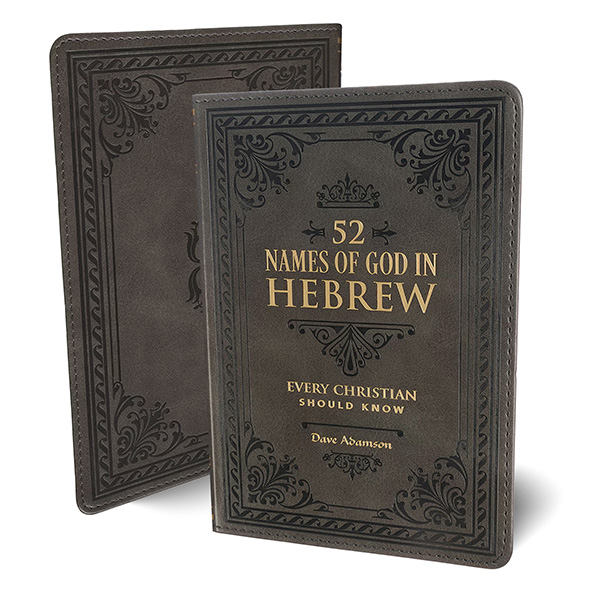
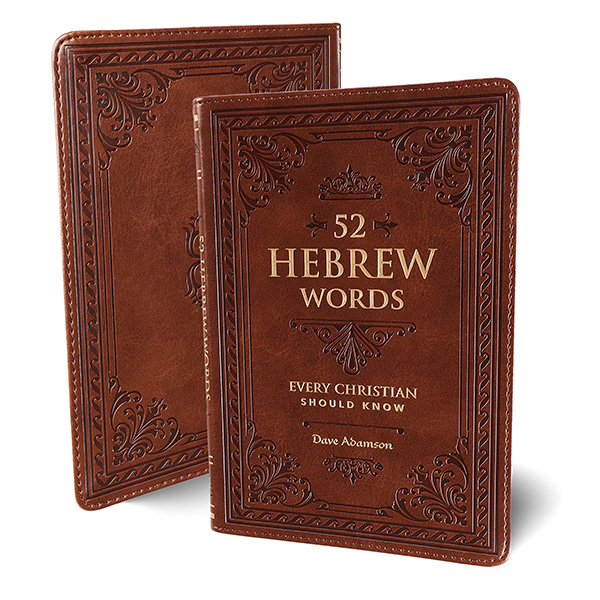
Tim Moore: So, Nathan, obviously we’re building this episode based on two wonderful books that we found, the first being 52 Hebrew Words That Every Christian Should Know. And the other, really the focus of our topic today, is going to be 52 Names of God in Hebrew That Every Christian Should Know. Both of these written by Dave Adamson, and we appreciate his insights and sharing and kind of peeling back the beauty, I won’t even say the mystery, but sometimes the meanings behind some of the Hebrew names that are in Scripture.
And if we go even back to the Hebrew, I think there’s more that we can learn than some of the English translations.
Nathan Jones: It’s exciting, my wife leads a women’s Bible study at our church, and she spent all of last year going through a different book about the names of God. And she would come home excited every night, “Nathan, Nathan, do you know what this means? You know what that means?” It just brings out so many aspects of God that when we just say God all the time, we kind of miss some points. But, you know, even God, Elohim is really what the original Hebrew was. Elohim, it’s a plural. It’s not a singular.
Tim Moore: Yes.
Nathan Jones: It points to the Trinity. It reflects that yet even though a Trinity, He’s one God. And you can even go back to Genesis 1:1, as the Creator, He was Elohim Bara, the Creator, one God. And you can find Elohim over 2,500 times in the New Testament and Old Testament.
Tim Moore: One of the gripes I have, if you will, and I hate to say gripe, but really, we lose some of the meaning in our English translation because the translators take the word Elohim and they just translate it as God. And so, singular God, that’s what we generally refer to the Lord as, is such a generic title. We use little “g” god to talk about false gods, but we use capital “G” God to talk about God. And yet His name, His otherness is so significant, so holy that I think we should revere the given names of God in Scripture.
Nathan Jones: Absolutely.
Tim Moore: So yes, as you said in verse 1 of Genesis 1, “In the beginning, Elohim, God created the heavens and the earth.” And that singular word Elohim in Hebrew is actually a plural word. The “im” at the end makes it plural.
So right there in Genesis 1:1, we begin to understand that this singular one God somehow is a plurality of personalities, a three in one. But Nathan, I bet you most people don’t know that there’s a secret code embedded within their English translation of virtually every Bible. If you read the introduction to your Bible, and I dare say most Christians probably have not, but there’s usually an explanation of the format and how they’re going to use various personal pronouns.
But in my New American Standard translation by the Lockman Foundation, it has principles of translation. And it explains how they’re going to sometimes use the word Lord with capital L and then small o-r-d to mean Adonai. And other times they’re going to have all capital letters, L-O-R-D, LORD when they are representing the word Yahweh.
And so, that in Hebrew was not even including any vowels. And so, the word Yahweh in Hebrew is Y-H-W-H. The Jews considered the name of God so holy, they would not even write it in its full context. And to this day, some of our Jewish friends, when they refer to God, they will use G’D just as a sense of reverence for the very name of God.
Nathan Jones: Yeah, and you bring up a good point about the reverence because when we just have a generic God or generic Lord, we tend to lose the reverence over time. And I love how the Bible distinguished between LORD uppercase, you know, 6,200 times in the Bible. It’s the personal name of God, but it was the sacred name of God. The Tetragrammaton has Yahweh, or we in English, Jehovah, and that was the personal name of God.
So, we can say God, but if we say Yahweh God or Jehovah God, we’re getting more personal. It’s like I can call you Colonel Moore, or I can call you Tim, you know? There’s a difference in how we approach based on a name. And if we go to Yahweh God, it’s so different than just God.
Tim Moore: It certainly is, and it’s such beauty and magnificence even in saying the word Yahweh. Now, we don’t say that out of irreverence for God. We have great reverence for the Lord God, but I think sometimes it elaborates our understanding of God’s revelation of Himself. And so, He revealed Himself in the beginning as God, but as He began to interact.
So, let’s go to Exodus. And if we go to Exodus 3:14, when Moses asked, “Who shall I tell them is sending me?” Going back to his own people, the Hebrew children there in bondage in Egypt, the Lord said…or verse 14 says, “God, Elohim said to Moses, I Am Who I Am. Thus, you shall say to the sons of Israel, I Am has sent me to you.”
This first revealed name of God, I Am who I Am, tells us that He was, is, and always will be. He is outside of human time; His character does not change. He does not change. He is eternally, I Am.
Nathan Jones: You know, as a kid, I used to think that Popeye had invented that, I am what I am. But no, it’s I Am. In other words, when Moses says, who are you? And He just says basically, I exist. Do I need a name? I’m the Creator. And so, there’s probably names of God that the Bible doesn’t touch. And there’s so many different names that He alone knows. Matter of fact, when Jesus returns, He’s going to be a name that only He knows…
Tim Moore: Oh, yeah.
Nathan Jones: At the Second Coming. I’m looking forward to that. We know He’s going to be called Yahweh Shema. Sorry, that’s the name of the…
Tim Moore: New city.
Nathan Jones: New Jerusalem.
Tim Moore: Yahweh Tsidkenu.
Nathan Jones: Yahweh Tsidkenu. So, there’s so many different names, but the fact that we–Adonai is kind of a personal, and then Yahweh. And just, but I Am. I mean, just, I exist. The power in that.
Tim Moore: And there’s even more to that. So, later, the Lord revealed more about His character in Exodus 20:5 when He said, “I am a jealous God.” Well, not jealous in a negative sense. We think of the word jealousy as being negative, but in this case, God is jealous for the worship that He is due. He will not share it with another false god. He is jealous that everybody respect His character, which is why the very first commandment that has a warning of punishment is the third commandment, which says, “We should honor the name of the Lord our God and not use it in vain.”
But then, Nathan, later in Exodus 34:6-7, the Lord reveals His name, and He said that the full name is, “The Lord, the Lord God.” In other words, Yahweh, Yahweh Elohim. “Compassionate and gracious, slow to anger and abounding in lovingkindness and truth, who keeps lovingkindness for thousands, who forgives iniquity and transgression and sin, yet He will by no means leave the guilty unpunished, visiting the iniquity of fathers on the children and on the grandchildren to the third and fourth generation.”
That’s a long name, but really that is the characteristic of God and that conveys how compassionate and gracious He is. But also, how just and holy and righteous He is. And certainly, He always will be.
Nathan Jones: And a name isn’t just something that sounds good, because a lot of times we pick names for our children to just sound good. Names are meant to convey a meaning or a purpose, who that person is.
Tim Moore: Right.
Nathan Jones: I named my daughter Madeline because it means tower of strength. And I wanted her, as she grew up, to be a tower of strength and to be fearless. My son’s middle name is Andrew, named after a good friend of mine, but also because it means manly. You know, I wanted him to grow up to be a man’s man, you know? Nathan, or really Nathaniel, is gift from God. Nathan’s the short version, so I’m just gift. So, I’ve always wondered, what does Timothy mean?
Tim Moore: Well, Timothy means honoring God. And I think my parents, much like yours, wanted me to live up to that name. And I certainly pray that I am and will live up to that name. So, sometimes we are given names that our parents hope we aspire to fulfill. Sometimes you think maybe a name should be given later, when we see what a child actually turns out to be.
And maybe, Nathan, that’s why the Lord changed certain people’s names because as their character manifests or as He intervened in their lives, He gave them a new name, which is why you and I look forward to the new name He’ll give us and hope that it’s a name that we want to have for all of eternity.
Nathan Jones: Yeah, that’s really exciting because the Bible says that when we are before the Lord, one of our eternal rewards is He gives us a new name on a white stone, possibly marble. And that’s the name that He thinks of us. You mentioned how Lord’s always renaming people based on what he knows our eternal names are. I won’t be Nathan forever. I always tease my wife because she once said that Nathan’s a nerd name…
Tim Moore: No.
Nathan Jones: You know? And I was like, so I always bring that up. And she’s like, “Ah.” But it’s true, I won’t be Nathan and you won’t be Timothy in the future. Thank goodness because there’s so many Nathans and Timothys out there.
Tim Moore: There are.
Nathan Jones: But, you know, it’ll probably be as if God names things based on their character, it’s going to be based on our character, you know? I remember Dr. Reagan, our Founder, used to say, you know, “In Heaven, I want to be called strong or courageous or brave, I don’t want to be called wishy-washy.”
Tim Moore: Exactly. Well, that is Revelation 2:17 that promises we will receive a new name, as will all who are overcomers because we put our trust in Jesus Christ.
Well, the author, again, Dave Adamson of these two wonderful books, 52 Hebrew Words and, more importantly for our conversation today, 52 Names of God in Hebrew, cites another author, John Mark Comer, who said, “God’s name is a stand-in for His character.” And that is why, again, we are prohibited from even taking His name in vain because His name represents His character.
So, let’s talk about some of the names that Dave brings out in the 52 Names of God. We’ve talked about Elohim from Genesis 1:1. What are some of the other names that really jump out of you from his book?
Nathan Jones: All right, if we jump to page 17, Yahweh Roi, the Lord is my Shepherd. One of the most famous Psalms, Psalm 23, “The Lord is my shepherd, I shall not want.” I mean, when you think of shepherd; it’s someone who guides you, protects you, and, you know, cares for you. And that’s a relationship the Lord is trying to convey there by calling Himself Yahweh Roi.
Tim Moore: Yeah, I love El Shaddai, the Lord or God Almighty. Obviously, El meaning God or El Elyon, the Lord Most High, or the Most High God. So, you can think about when Abram or Abraham encountered the priest of Melchizedek there in Genesis, he was a priest of God Most High, El Elyon.
Yahweh, which we’ve already said is the tetragram, which we transliterate to Jehovah. Folks, realize there is no J in Hebrew. So, any word that began with a Y as it was transliterated into Latin became a J. So that’s where we get Joshua and Jesus, instead of Yeshua and Yahweh was transliterated into Jehovah. But Yahweh Sabaoth or Jehovah Sabaoth, the Lord of Host or the Lord of Armies.
And you’ve already mentioned the Lord of Righteousness, the Lord, Our Righteousness, Yahweh Tsidkenu. And that’s an odd word because it has the letters T and S at the beginning, hard for us to pronounce. But in Hebrew Tsidkenu, meaning our righteousness. And so, Yahweh, the Lord God is our righteousness.
Nathan Jones: Absolutely.
Tim Moore: And that points to Christ because He is our righteousness.
Nathan Jones: Right, because Jesus, the pre-incarnate Jesus was all throughout the Old Testament, He was called the Angel of the Lord, the messenger of the Lord, the voice of the Lord. So, when He comes in His incarnate self in human form, He continues to be the messenger, although we don’t call Him the Angel of the Lord anymore. I love the Lord of hosts, if you go back to Yahweh Sabaoth.
Tim Moore: Yes.
Nathan Jones: 570 times. It’s meant to convey His authority as the highest position in the universe.
Tim Moore: Amen.
Nathan Jones: The one who is in charge of everything, but also, it’s a military commander. It’s one who has the authority to go into war and battle on behalf of his name, but also on behalf of his children.
Tim Moore: And so, you could almost see in that name a preview or premonition of Jesus’ glorious Second Coming when He comes leading the armies of Heaven, which is not only the angelic host, but as we understand it, clearly, it is the resurrected saints. It is the glorified saints who have put their trust in Jesus Christ throughout the Church Age coming back with Him, as He commands that great army of hosts and He is Yahweh Sabaoth. What a beautiful picture. A lot of folks like the name Jehovah Jireh or Yahweh Jira. What does that mean?
Nathan Jones: Well, if we go to page 65 here in his devotional, I like to think of it as a devotional because it really gives you a little thought each day with a beautiful little picture.
Tim Moore: Yes, it does.
Nathan Jones: And a verse. We have Yahweh, Jehovah Jireh, the Lord will provide. You go to Genesis 22. You know, for instance, when the Lord had asked Abraham to sacrifice Isaac and the angel grabbed his arm and stopped him and said, okay, you’ve proven your faith. And what did he do? The Lord, our provider, provided a ram who would die in the place of Isaiah, Isaac, excuse me.
There’s also on Mount Moriah, how it points to the cross where Jesus would be that sacrificial lamb, that ram who would die on behalf of the people, too. So, the Lord will provide.
I think of the Millennial Kingdom, where it says that those who are planting the seed, those who are picking the grapes are passing those who are planting the seed because the Lord will provide all the food and care we want when He’s King over the earth.
Tim Moore: Amen, you know, so many beautiful names of God in Scripture. But sometimes they are hidden because they’ve been translated into English and therefore, we just get the generic God or the generic Lord. So, it’s very helpful to pull back some of those names that are in the Scriptures you’re familiar with.
I love the name Shekinah. Now, we’re familiar with the Shekinah Glory of God, but it means the manifest presence, the radiant, beautiful, glorious presence. So, when we hear that the Shekinah Glory of God filled the Temple, is that God the Father, the Son, the Holy Spirit? I think it’s the Holy Spirit, but also the presence of the pre-incarnate Son radiating. And when the disciples saw Jesus transfigured, I think in that instant, they saw His radiant beauty. He was just glowing.
And, of course, John later sees Jesus in all His radiant beauty during Revelation. So that’s the way we’re going to see Jesus, radiating His glory, filling the Temple, and really being the light for the whole earth. We won’t even need a sun when Jesus comes back to reign on the earth.
Nathan Jones: Yeah, in the eternal state, God is the light source for the new Jerusalem. I love Melek, which is King. You can find that especially in Luke 17:21. It is a ruler of heaven and earth. And I remember when Jesus says, you know, “I am a king, but you do not honor me as you would a king.” He was trying to point to the fact that, yeah, He came as a lowly servant and people treated Him as such, but He is really the King of the universe.
Tim Moore: Yes, He is.
Nathan Jones: And if I, even I, say, went to the White House, I just can’t knock on the door, walk in, “Hey, Don, how are you doing?” Or, you know, whatever president at the time. That would be disrespectful. I’d say, “Hello, Mr. President.” Same thing, even though God is called our friend in the Bible, we still in the back of our minds have to have that little fear, that respect that, yes, He is the King of the universe, deserves the bowing and respect.
And you know what the wonderful thing, Tim, is that the Bible says that we’re in the presence of God. The radiance of His power and love will just make us fall on our knees and worship Him. He’s that amazing. And that’ll help because, you know, at times, as a man, I have a little trouble, you know, getting into the worship mood. But I know in Heaven those bonds will be gone, and I’ll just bask in the radiance of God.
Tim Moore: Bask in the radiance of God. I love the fact that as Jesus came, He gave us yet another name that we could refer to the Father as. He said Abba, and Abba is an intimate term. It still has a respect and a reverence, but it shows that God is our Heavenly Father. And so, what a beautiful way to picture the Lord and our relationship with Him.
You know, my grandchildren call me Saba, which is Hebrew for grandfather. And they’ve also learned that my real name is Tim. So, my grandsons have asked, “Why can’t we call you Tim?” And I said, “Because you’re my grandson, you are not allowed to call me Tim. We are not in that kind of relationship. My name, to you, is Saba.”
And yet it is a name that conveys not only a degree of respect, but intimacy. You don’t call me Saba. The average person doesn’t call me Saba. It’s a special name for my grandchildren, and I love hearing that name. Sometimes they even alter it. My granddaughter once said she was going to call me Sabi, which was going to be her version of Saba. You know what? Coming from the mouth of a five-year-old, it was a beautiful sound to my ears.
And so, the point being that God has given us names that we can call Him to include Abba, and He has revealed Himself in the person of Christ as Emmanuel. That’s yet another manifestation of His character, which means what?
Nathan Jones: God with us, you know, back to Abba real quickly. You know it’s interesting, that actually in the Hebrew, it’s just Ab.
Tim Moore: Yes, just Ab.
Nathan Jones: But we get an Aramaic name here, Abba is the Aramaic version.
Tim Moore: That’s true.
Nathan Jones: Back to Immanuel, God with us because every Christmas, we think about God with us. He’s the One Who is, as He says in Matthew 1:23, “I am always with you.” Isn’t that nice to know that no matter where we go, what we do, how we fear, how we worry, that God says He is always with us? And because He’s omnipresent, He’s with all of us all the time.
Tim Moore: You know, Nathan, I heard a great point made the other day by our friend Todd Friel. We hope to have him on before too long, but he made the point that a young woman had written in saying, “I don’t feel like God’s around me all the time.” He said, “Well, don’t trust your feelings. Trust the promise of Christ, which He promised He would be with us.”
So, if you’re relying on your feelings, feelings go up and down. Rely on the revealed Word of God, the promise of God conveyed in the very name of God, Emmanuel, He is with us. And not only is Christ with us; He also sent forth His Holy Spirit, which is the Ruach HaKodesh, which means the Holy Spirit. Ruach, meaning breath or spirit, and HaKodesh meaning holy. So holy, holy, holy, holy is the Lord God Almighty. But His Holy Spirit dwelling in us if we put trust in Christ, if we believed in His name unto salvation.
Nathan Jones: You know, it’s interesting going back to Emmanuel, the reference in Matthew there was to Joseph. There was the angel to Joseph. Now, here’s Joseph, he hasn’t even married Mary yet. She’s already pregnant with… You have to raise the Messiah. You know, you’re going to be basically an outcast for the rest of your life. They are going to flee down to Egypt. And so, this angel’s saying basically, I am with you.
It kind of goes back to with Gideon and Joshua and Moses beforehand where the Lord said, “Don’t worry, I am with you, I’m here to protect you.” And that saying, God with us, is with us today that He’s going, don’t worry, I am with you. I will give you the words, and I will give you the courage.
Tim Moore: You know, you pointed out even as they fled, as the Hebrew children fled Egypt in the other direction, the Lord was with them. And it’s our friend that has pointed out, even as He manifested as a pillar of fire at night and a cloud in the day, well, you’re in the desert. It’s cold at night, so they’ve got a pillar of fire to keep them warm. It’s hot in the day, so they got a cloud to cover them.
God always provides for us. Even in those two manifest versions of God, He was their provider, their Jehovah Jireh. And yet Jesus, which is the name we refer to our great God and Savior as, and the person of the Son of God, was given a name Yeshua. Now, folks, this is the same name of Joshua in the Old Testament, but it has meaning because the word and the name Yeshua means salvation. And, indeed, Jesus brought us salvation.
Nathan Jones: That’s excellent, you know, some of my other favorite ones, if we turn to page 23 again, beautiful pictures in this book here. He’s Yahweh Shalom, the Lord of Peace. You know, it’s interesting that the Lord is depicted as a military commander, and we know that He’s going to ride into battle and He’s going to defeat evil just with His spoken words. But He’s doing that to defeat evil so we can usher in a time of peace.
And so, we have Yahweh Shalom, the Lord is complete. In other words, as John 14:27 says, it’s about complete security. We have complete, even though the world is raging and the insanity around us, if we find that center of peace, that center of peace isn’t in ourselves as humans like to look inside. It’s up there, it’s in God who His Holy Spirit dwells in us.
Tim Moore: You know, there’s so many beautiful words. We’ve talked about 52 Names of God in Hebrew, and we’ve touched on many of them. The 52 Hebrew Words, that Dave Adamson shares in his companion book also gives us great insight. We have words like hallelujah, which most Christians know. We have words that are actually Aramaic, like Maranatha. We say that a lot, come quickly, Lord Jesus.
Nathan Jones: Come quickly, yes!
Tim Moore: When I take pilgrims to Israel, we have a whole list of words that we teach people, including shalom, we’ve already talked about that, meaning peace, or boker tov, broken toe, meaning good morning, braha emunah. I love the word netzer because it is a word that is the root of Nazarene, and it means branch. So, you think of Isaiah promising that a righteous branch would spring forth, and sure enough, Jesus is that netzer, that righteous branch that fulfilled that prophecy.
So many other beautiful names in Hebrew and sometimes Aramaic that Jesus Himself used.
Nathan Jones: Yeah, we don’t even realize. Like, hallelujah, how many times have we sung when we said, hallelujah? It’s a praise word, praise God. Hallelujah, Yahweh, God.
Tim Moore: Or the most famous Jewish prayer, the Shema, which simply means hear, hear, O Israel, Shema, O Israel, or the name of Israel in Hebrew, Yisra’el, that they should hear that the Lord their God is one God. Well, one God, but Elohim revealed as three persons, and we know them as Father, Son, and Holy Spirit.
Nathan Jones: Amen. I love on page 27 here, again, another beautiful picture, The God who sees me, El Roi, not Rob Roy, but El Roi, the one who is with us, the God who sees me. To Genesis 16:13 when Hagar was cast out with her son from Abraham’s family. And God says to her, you know, “I am El Roi.” She says, “He is the God who sees me.” In other words, again, that presence that God is always there.
Tim Moore: Amen.
Nathan Jones: Humanity rebels against God and wants Him not to be there. And that’s what hell is, the absence of God in eternal torment and fire. But with God, we have the source of life, we’re connected to that source.
Tim Moore: We certainly are. I love other words. When in Israel one time, we had a little bit of a crisis moment and I said, “Everybody calm down. We’re going to pray, we’re going to pray in Hebrew, Bevakasha, which means please. Please, Lord, Bevakasha. And so, we began our prayer with that Hebrew word, asking Lord, please, if it be Your will, may this crisis pass, and indeed it did.
I love other words like Hineni. Those are the words that Abraham uttered when God called him to leave his home and he said, “Hineni, here I am.” Kind of a switching of God being the great I Am, but here I am, or really in Hebrew, it means here am I. And so, he was willing to serve, Abraham was, and he used a beautiful word, Hineni.
So, oftentimes, even as I feel like the Lord is calling me to do something, I’ve actually prayed, Hineni. Lord, here am I to do your bidding and to follow as you lead. And may I not lag wherever you lead as my Adonai Roi, which means my Good Shepherd.
Closing
Tim Moore: Well, folks, we opened this episode with a Hebrew word that most people already recognize: Shalom! And as we said, it means peace, but it’s also used to say “Hello” and “Goodbye,” much like Aloha.
And there are many other Hebrew words that Christians should be familiar with, like Shema, Ruach, Hallelujah, Yisra’el, Torah, Hineni, and Netzer. And I’ve often said, as you heard me say it already, that my favorite Hebrew word is Saba because that’s what my grandchildren call me. But in fact, our favorite Hebrew word or name is Yeshua or Yeshua HaMashiach.
Nathan Jones: As we’ve demonstrated today, each of the Hebrew names of God conveys yet another aspect of His beauty, His majesty, His holiness, His love. Similarly, certain Hebrew words help followers of Christ understand the native tongue Jesus spoke, also offering insight to new understanding of our Hebrew Bible.
So, we have obtained two books that offer beautiful insights into the 52 names of God in Hebrew, or 52 Hebrew Words. They’re handsomely bound and either can be included for you for $15, and that includes shipping.
Tim Moore: Well, we appreciate the insights that author Dave Adamson shares. Even if we don’t know or endorse every source he cites, this is always the case with books other than the Bible itself. We cannot claim to agree with every word any author writes. And truth be told, Nathan and I probably wouldn’t agree with every word we wrote in the past.
Please don’t take this as a tepid endorsement. 52 Names of God in Hebrew, and 52 Hebrew Words are both wonderful resources that will, as I said earlier, excite and challenge you.
Nathan Jones: There’s one other point we need to emphasize before we close this episode focusing on the names of God.
Tim Moore: That’s exactly right, Nathan. Whichever of the various names you call God by, including the general title God, we must maintain a sense of reverence and awe for His holy name.
In the Third Commandment, God handed down to Moses, He warned, “You shall not take the name of the LORD your God in vain, for the LORD will not leave him unpunished who takes His name in vain.”
Nathan Jones: This is the only one of the Ten Commandments that include the promise of punishment for violating it. God is so holy, so high and lifted up, and other, that we need to revere and honor His very name.
That is why Satan has instigated a besmirching of God’s holy name. No one swears on the name of false gods, like Allah or Buddha or the Hindu gods. Nobody dismissively utters the name Mohammed when they’re angry or startled or annoyed. But Jesus’ name is dragged through the mud, and God’s name is used flippantly and with disdain all the time.
The fact that Jesus’ name is used as a curse word is proof that Jesus Christ is indeed the One True God.
Tim Moore: So, folks, let’s determine to honor the name of our great God and Savior in all we say and do, lest the name of Jesus or our Heavenly Father or the Holy Spirit be diminished by our words or actions.
So, in the name of Yeshua HaMashiach, our Emmanuel who gave Himself as our Yahweh Tsidkenu and is coming soon as our Yahweh Shammah… Shalom!
Resource
Announcer: Lamb & Lion Ministries is pleased to offer you a limited time gift, one of our 2027 Bible trackers, your daily pathway through the Word of God. You’ll have the opportunity to connect with us throughout the year as we share exclusive prophetic content pointing to the Messiah.
Call the number on your screen to receive your copy by mail. Additional Bible trackers are available for purchase in bundles of 10/$5 or more. If you have 10 minutes a day to commit to God’s Word and seek Christ in prophecy, our 2027 Bible tracker will be a treasured resource. Order yours today and plan to join us in reading through your Bible in 2027.
End of Program
