
God’s Mighty Angels
No Chubby Cherubs Allowed
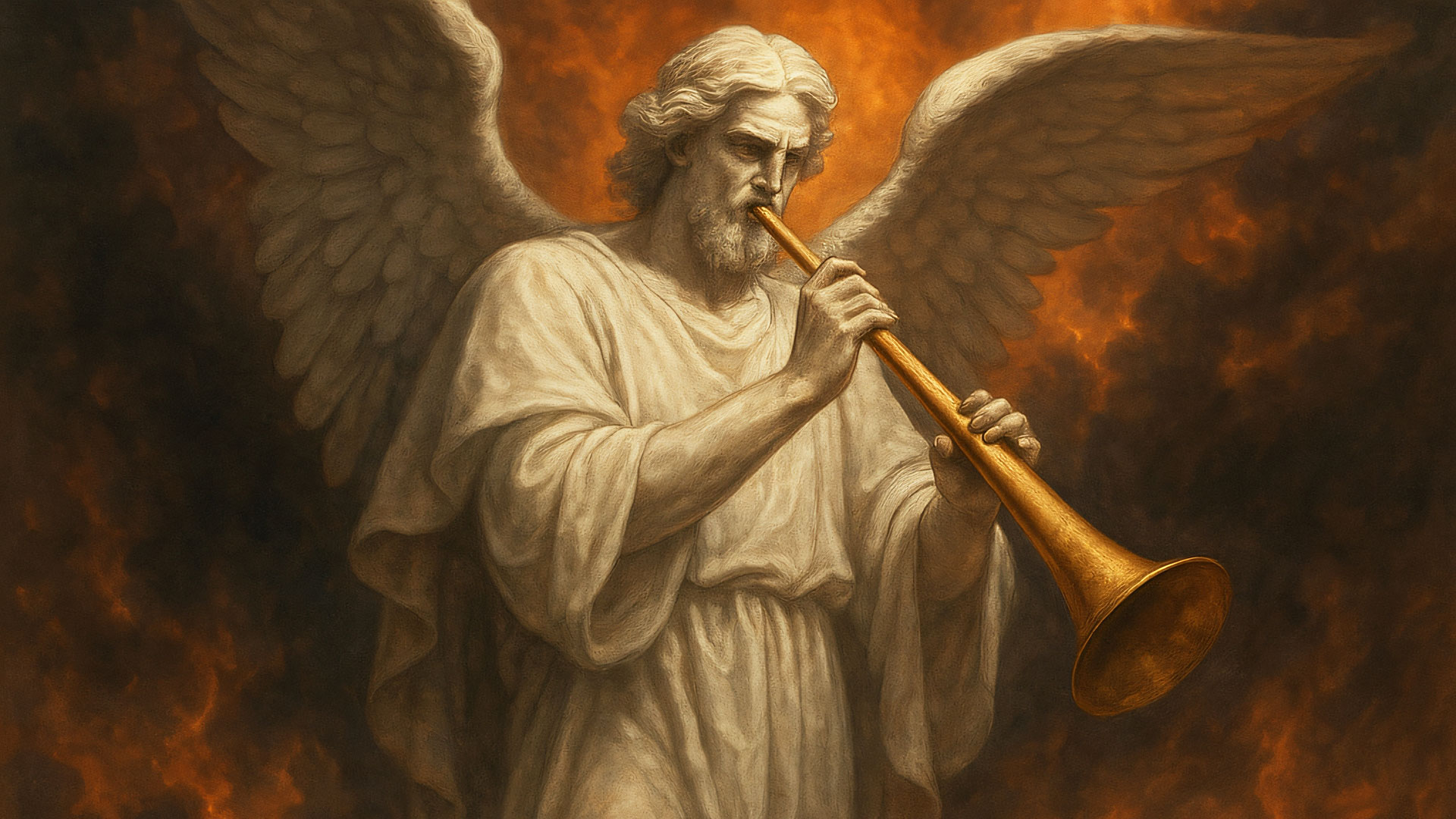
When I was younger, like most people, I operated under the misconception that angels all look alike. In my mind’s eye, they stood in uniform, like a tray of gingerbread men coming out of the oven, or like white-clad clone troopers marching through a Star Wars battle scene. That imagery may have captured my mind because, growing up, I leaned heavily on the classically illustrated children’s books from my parents’ generation. They depicted celestial beings with a mid-twentieth-century Americana cultural uniformity. These angels were often portrayed as Caucasian men with curly blond hair, sporting two feathery white wings, floating a golden halo over their heads, possessing a fairly stoic demeanor, and dressed in white robes reminiscent of the ancient Roman toga.
Yet one of the first angels the apostle John described in the book of Revelation was “a strong angel proclaiming with a loud voice” (Revelation 5:2 NKJV). Clearly, John saw characteristics that set this angel apart from the myriad others he’d just encountered. This strong angel, for example, was both strong and loud. Was this angel more shredded than the other angels? Did he sport huge muscles like Lou Ferrigno of Hulk fame—a Mr. Universe compared to the others? Maybe. Or did he lift heavy weights like a Russian powerlifter, or even whole planets like the mythological Atlas? John never described such feats. And what about loud? Was his voice louder than all the others?
Angels differ widely in appearance and abilities. So let’s explore three angelic classes that highlight the uniqueness of these celestial beings. First, there are the heavenly proclaimers—the Seraphim. Second, the mighty wheelmen—the Cherubim. Third, the fire wielders—the Fire Angels. This sampling will show that angels are not photocopies but are as different from one another as human beings are.
The Seraphim
Imagine a scene of unimaginable beauty, such as a golden sunset over a snow-capped mountain peak. That’s kind of what John must have felt when he encountered the Four Living Creatures in God’s throne room. Gaping, John wrote, “And in the midst of the throne, and around the throne, were four living creatures… The first living creature was like a lion, the second living creature like a calf, the third living creature had a face like a man, and the fourth living creature was like a flying eagle. The four living creatures, each having six wings, were full of eyes around and within” (Revelation 4:6-9).
The Mighty Worshippers
Here we meet a class of angels called Seraphim, who, upon gazing at the radiant beauty of the living God day after day, never tire of bowing and praising His name: “Holy, holy, holy, Lord God Almighty, who was and is and is to come!” (Revelation 4:8). These angels love to hear the worship of the Lord, whether from angelic choirs or from the proprietary song sung by the 144,000 Jewish evangelists (Revelation 14:3).
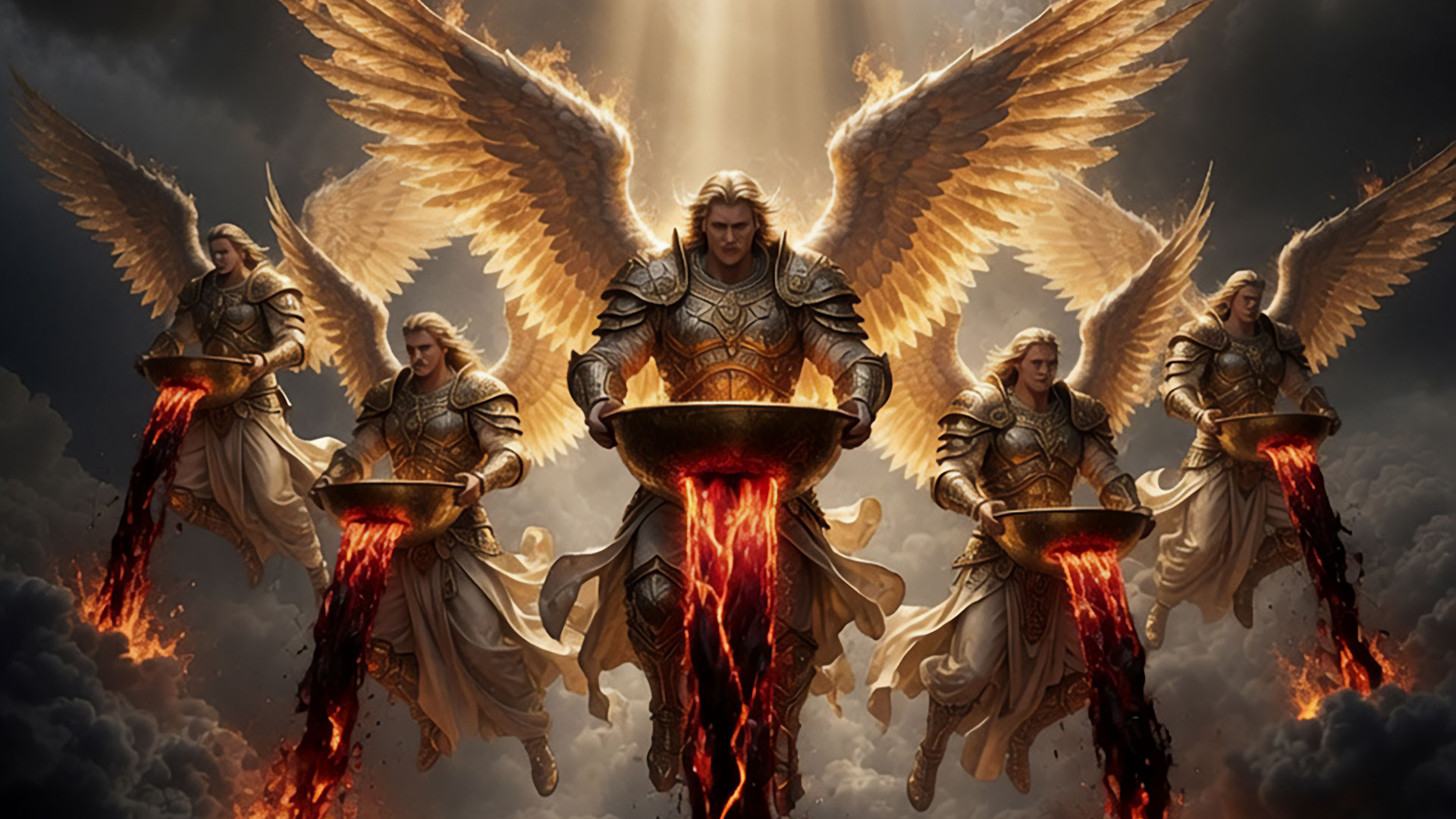
When not engaged in worship, they carry out God’s judgments, such as handing the seven bowl judgment angels their liquid instruments of wrath (Revelation 15:7). Whenever you see the Seraphim throughout the Revelation narrative—and it’s frequent—they are praising God and carrying out His divine will. They always get the final “amen.”
The Burning Ones
These Seraphim look upon the magnificence of the One on the Throne, not with just one set of eyes, but with hundreds covering their entire bodies. And their wings! We tend to think all angels have two wings, but the Seraphim have many more, six to be exact: “with two he covered his face, with two he covered his feet, and with two he flew” (Isaiah 6:1-6).
John attempted to describe these four unique angels. They resembled the grand sphinxes that had historically guarded the Egyptian pyramids. John might have thought of the Seraphim as the Burning Ones, the legendary winged serpents that protected the Egyptian pharaohs’ thrones.
Each Seraphim possessed a different face. One portrayed a lion, another an ox, another a man, and another an eagle. John naturally found it hard to classify these angels, so he simply called them the “living creatures.”
Various theologians over the years have attempted to find symbolic meanings in their different countenances. Perhaps the lion’s face symbolizes majesty and omnipotence, the ox represents faithful labor and patience, the man signifies intelligence, and the eagle stands for supreme sovereignty. Or maybe the Seraphim represent the leaders of the different animal domains: the lion as the leader of the wild animals, the calf as the leader of domestic animals, the man as the leader of humankind, and the eagle as the leader of the kingdom of the flyers.
Others believe the Four Living Creatures represent Christ’s attributes as shown in the Gospels: in Matthew as the lion of the tribe of Judah, in Mark as an ox serving faithfully to Yahweh, in Luke as God in human form, and in John as an eagle soaring as the divine Son of God. Whatever the Four Living Creatures may symbolize, they stand out as fantastical yet genuine angelic beings—beings that every Christian will one day gaze upon in awe.
The Cherubim
I imagine that if John could have looked over the shoulders of the Seraphim, he would have described what the prophet Ezekiel saw during his encounter with God’s throne more than 600 years earlier—the Cherubim. Ezekiel wrote, “And I knew they were cherubim. Each one had four faces and each one four wings, and the likeness of the hands of a man was under their wings” (Ezekiel 10:20-21).
The Slandered Ones
If any class of angel has been misconstrued, slandered even, over time by the poetic license of Renaissance artists and Hallmark card designers, it has been the Cherubim. Every Valentine’s Day, these mighty angels of God are denigrated as chubby, diaper-wearing babies who sport tiny bows and heart-shaped arrows while holding banners that display sappy sayings. Many myths have developed around the Cherubim, especially the unbiblical idea that when babies die, they transform into these cherub-like spirit beings. Nothing could be farther from the truth!
The Mighty Wheelmen
Ezekiel detailed his wondrous encounter with the Cherubim at length in his first ten chapters, and it was anything but a trip to the nursery school. He observed, while he “was among the captives by the River Chebar, that the heavens were opened and I saw visions of God” (Ezekiel 1:1). What the captive prophet saw was “a whirlwind coming out of the north” like a “great cloud with raging fire engulfing itself” (Ezekiel 1:4). “A brightness was all around it” and “radiating out of its midst like the color of amber” (Ezekiel 1:4). Amber, called electrum in the Old Testament—a brilliant metallic substance composed of silver and gold—emanated from the cloud. Great bolts of lightning burst forth from the raging nuclear furnace. Centuries later, John would describe the same imagery in Revelation 4, identifying the emanating cloud as the One on the Throne.
And the throne moved! That’s because God’s throne is, in fact, a chariot. Ezekiel described the throne’s four great wheels in detail. All four wheels had the same uniform appearance, a beryl color (emerald or aquamarine). The wheels had even been humbly named: “As for the wheels, they were called in my hearing, ‘Wheel'” (Ezekiel 10:13). Not your typical Michelin tires, these wheels featured “a wheel in the middle of a wheel,” like some fancy tricked-out Hummer’s spinning rims (Ezekiel 1:16; 10:10). The rims were “so high they were awesome” and “full of eyes, all around the four of them” (Ezekiel 1:18; 10:12).
The truly stunning image befuddled the prophet, for within and beside each of these “wheels within a wheel” stood a Cherub. These angels performed their duty as million-horsepower engines, propelling the throne-chariot forward. As Secretary of War, Pete Hegseth once remarked, “It’s completely unacceptable to see fat generals and admirals in the halls of the Pentagon.” It appears equally unacceptable to God that chubby cherubs carry His celestial throne.
You might picture a hamster running in a wheel, but these angelic wheelmen never move their legs or change direction. Ezekiel was floored that “When they moved, they went toward any one of four directions; [but] they did not turn aside when they went” (Ezekiel 1:17; 10:11).
God is so powerful that He doesn’t turn His chariot; rather, the whole universe veers in the direction God desires. The throne-chariot’s range is limitless, as the Cherubim “went wherever the spirit wanted to go,” wherever and whenever God desired to be present in space and time (Ezekiel 1:12). The throne-chariot, therefore, transcends all dimensions in its travels. God’s throne can remain in heaven or, if He wishes, appear at your front door. There is no place where God cannot bend the universe to His will.
The Winged Wonders
According to Ezekiel, the Cherubim appear to possess some human-like qualities. They resemble a man because they stand upright and have straight legs. The Cherubim also have hands that look like a man’s hands. But that’s as far as the human similarities go, because they also have many animal-like features. Their feet look like the soles of calves’ feet. Unlike the Seraphim, which are limited to a single face, each Cherubim actually possesses four faces—a lion on the right side, an ox on the left side, and the faces of an eagle and a man in front and behind.
Unlike the Seraphim, who have six wings, the Cherubim are limited to four. “Their wings stretched upward; two wings of each one touched one another, and two covered their bodies” (Ezekiel 1:11). When the Cherubim flap their expansive wings, “the noise of their wings [roars] like the noise of many waters… like the voice of the Almighty… like the noise of an army” (Ezekiel 1:24). Whenever the One on the Throne issues a command, the Cherubim lower their wings in humble submission, ready to obey His divine order as the universe bows to the Almighty’s will.
And the speed at which the Cherubim fly! Ezekiel described these mighty angels as “sparkling like the color of burnished bronze” and “like burning coals of fire,” with “the appearance of torches going back and forth” (Ezekiel 1:7, 13). Ezekiel’s mind boggled at the fact that when the Cherubim ran back and forth, they moved like a flash of lightning. Apparently, no force in the universe can travel at the speeds the Cherubim do, even far beyond the speed of light itself.
The Almighty sits enthroned upon the Cherubim. No wonder the writers of the Old Testament, when describing the Ark of the Covenant, compared it to a chariot in which God sat enthroned on the Mercy Seat between the Cherubim. The artisans who crafted the golden Ark sculpted “gold cherubim that spread their wings and overshadowed the ark of the covenant of the Lord” on its lid (1 Chronicles 28:18). The scene in the earthly temple, then, was meant to depict in miniature the divine scene of God’s heavenly temple. There, the mighty Cherubim stand ready to carry the Almighty’s throne across the universe at His command.
The Fire Angels
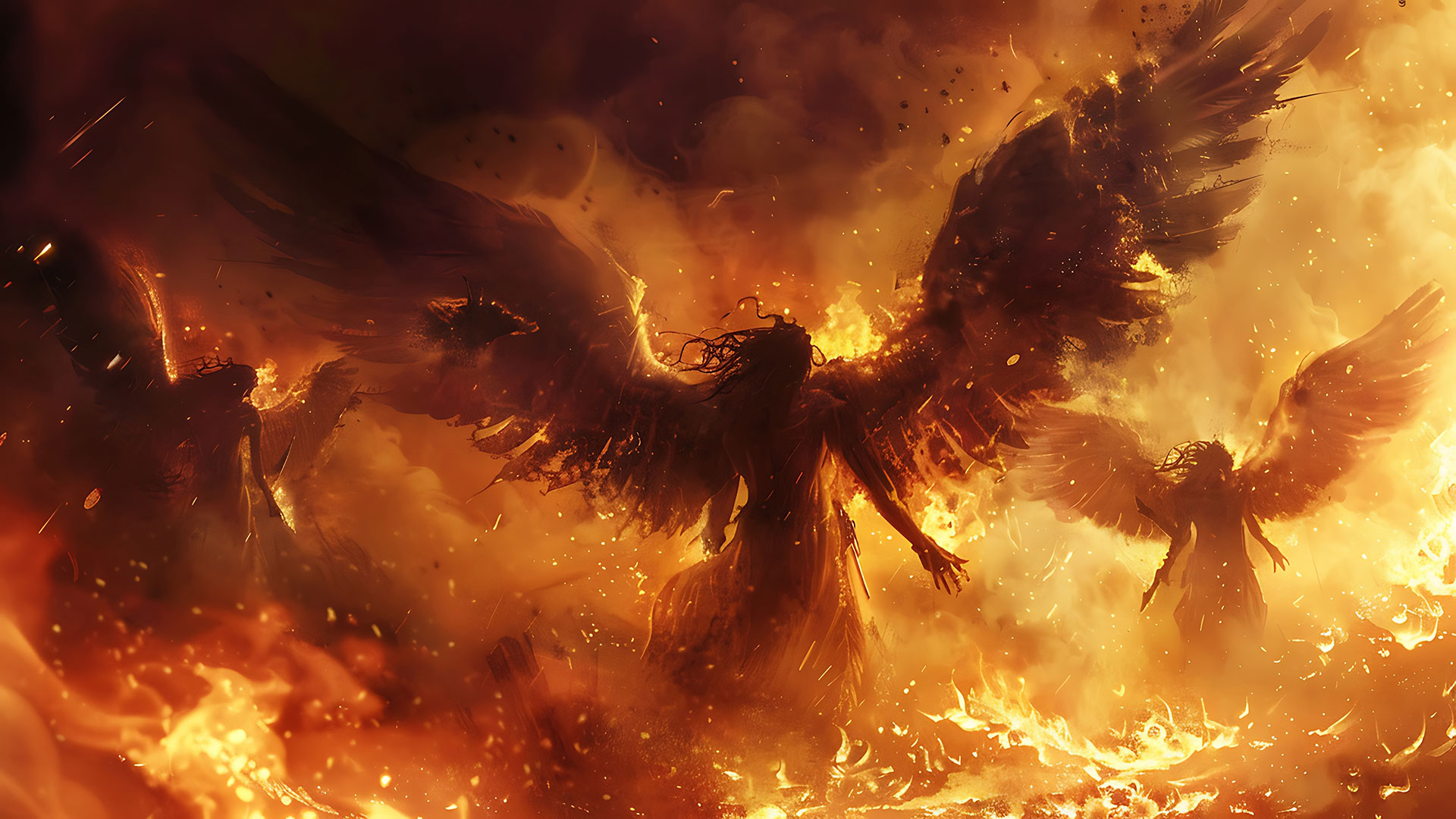
In Revelation 14, we are introduced to another wondrous angel, possibly a whole class—those who wield power over fire. Bellowing from the fiery mouth of a Fire Angel, the molten messenger delivered the Father’s order to angels tasked with harvesting the wicked, saying, “Thrust in your sharp sickle and gather the clusters of the vine of the earth, for her grapes are fully ripe” (14:18). The harvesting angel obeyed, “So the angel thrust his sickle into the earth and gathered the vine of the earth, and threw it into the great winepress of the wrath of God” (14:19). Armageddon!
How fascinating that God’s mighty angels can control the elements. Read the book of Revelation, and you will encounter angels who direct the winds, shift the tides, displace the stars, and even alter the course of the cosmos. Now we meet an angel with power over fire, much like Johnny Storm from the Fantastic Four comics.
To survive reentry into Earth’s atmosphere, the space shuttles could withstand temperatures of up to 3,000°F by using a thermal protection system made of reinforced carbon and other fibrous refractory composite insulation tiles. To endure the blazing heat, does the Fire Angel likewise wear insulated attire, or is his skin Teflon, or is he made of superheated plasma energy? Would the 27-million-degree core of our sun even phase him?
The Seraphim, the Cherubim, and the Fire Angels genuinely challenge my limited understanding of God’s mighty angels. Many of them exist as forces of nature rather than flesh and blood. These celestial creatures are so strange yet so marvelous that they defy wonder. And to think that one day, those who call Jesus Savior and Lord will get to know them personally.